Tummy tuck
Abdominoplasty · Dermolipectomy
Removing excess abdominal skin and repairing separated abdominal muscles — the most requested procedure after pregnancy and after major weight loss.
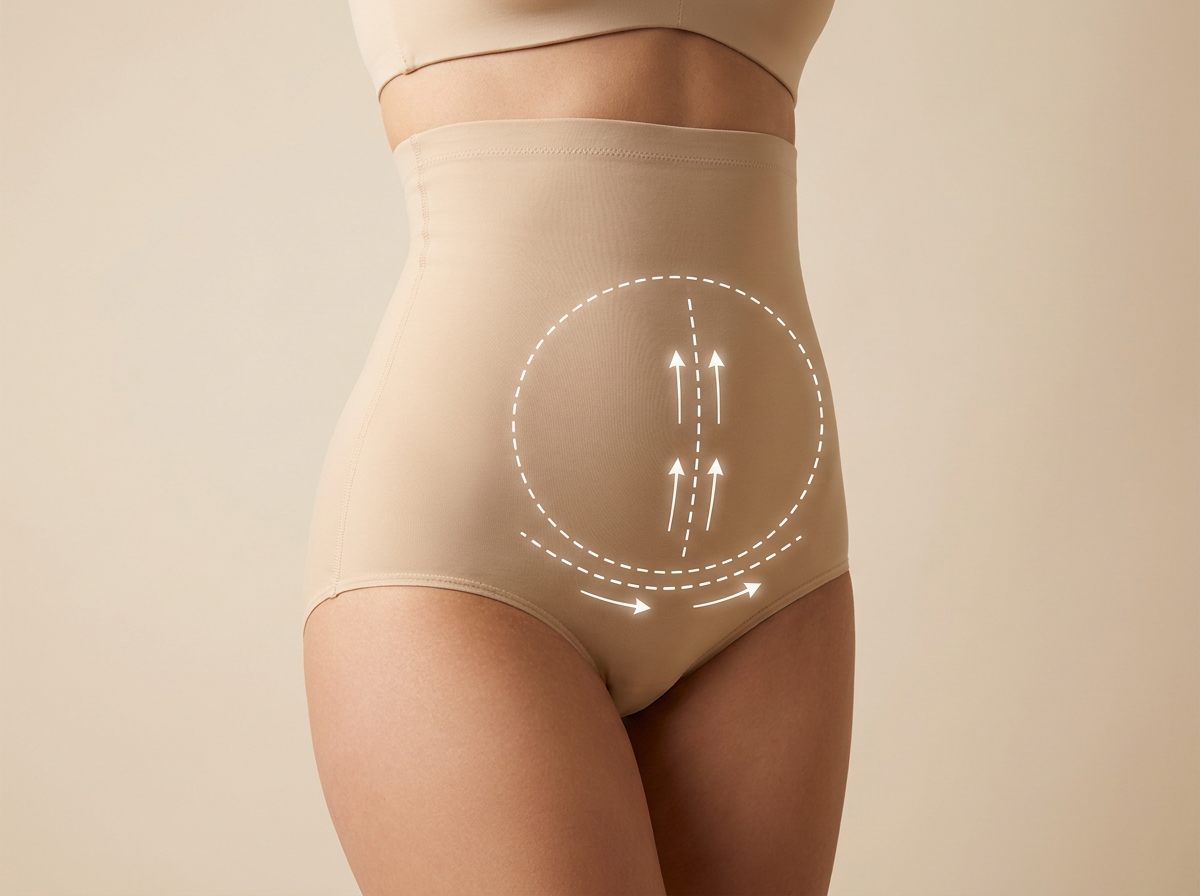
Removing excess abdominal skin and repairing separated abdominal muscles — the most requested procedure after pregnancy and after major weight loss.
A tummy tuck is not a weight-loss operation. It solves a mechanical problem: skin that has lost its elasticity and muscles that have separated and will not come back with exercise.
Clinical examination, measurement of muscle separation, photography, and discussion of exactly where the scar will sit — drawn on your body and agreed before surgery.
Blood work, anaesthetic assessment, stopping blood thinners, stopping smoking four weeks ahead. You receive a written checklist.
A horizontal incision low on the abdomen within the underwear line, removal of excess skin, suturing of the separated muscles, and repositioning of the navel. May be combined with waist liposuction when clinically appropriate.
One night in hospital, then reviews on day 3, week 1, week 3 and month 3. For international patients, video follow-up after you return home.

Every surgical procedure carries potential risks. Risks vary with the procedure and your health, and the surgeon will discuss them with you along with the measures used to reduce them:
Yes — the scar is permanent. It is placed horizontally low on the abdomen, within the underwear or swimwear line. For the first three months it is red and raised, then lightens progressively over 6–12 months into a faint line. You receive a written scar-care protocol.
Flight timing is decided individually based on your recovery and clot risk, but as general guidance: short flights (under four hours) are typically possible from around 10–14 days, and long-haul from around three weeks, always with compression stockings and hourly movement. For patients coming from the Gulf we typically plan a 10–14 day stay in Abu Dhabi, confirmed at your consultation.
Yes, when clinically appropriate — this is called lipoabdominoplasty. Liposuction of the waist and flanks can noticeably improve the waistline, and Dr. Roseli will advise whether it suits your case at the consultation.
A mommy makeover is not one operation; it is a combination that pairs a tummy tuck with a breast procedure (lift or augmentation) in a single session, for patients who prefer one recovery.
Pregnancy after a tummy tuck is possible and medically safe, but it will stretch the skin and muscles again and undo the result. We advise completing family planning first.
Usually not, as it is classified as cosmetic. The exception is an abdominal hernia or recurrent skin infection under a skin fold, where insurers may cover part. Assessed case by case.
The only correct answer comes from a clinical examination. Book a consultation — in person, or by video if you are outside the UAE.