Calf Contouring
Calf Augmentation · Calf Implants
Calf contouring reshapes the lower leg using implants, fat grafting, or a combination, to build volume and improve proportion where the calf muscle appears underdeveloped or asymmetric.
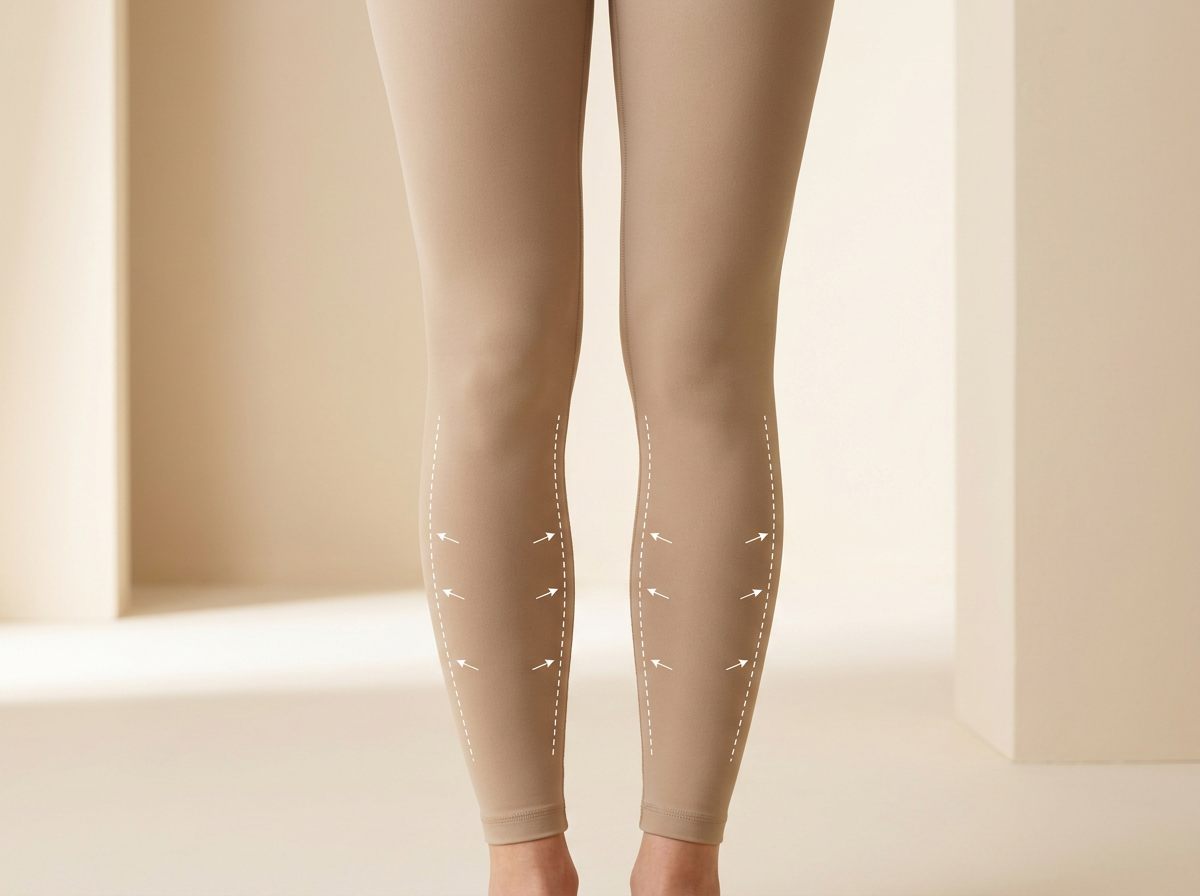
Calf contouring reshapes the lower leg using implants, fat grafting, or a combination, to build volume and improve proportion where the calf muscle appears underdeveloped or asymmetric.
Some people have calves that stay thin and flat no matter how much they train, often due to muscle shape rather than fat or fitness. Calf contouring adds structured volume to the lower leg, improving balance between the calf, knee, and ankle. It does not change bone structure or correct significant leg-length or alignment issues.
We examine your calf shape, muscle tone, skin quality, and circulation, and discuss whether implants, fat grafting, or both suit your anatomy.
Pre-operative blood tests and a vascular assessment are arranged. You will be asked to stop smoking and certain medications before surgery.
Solid silicone implants are placed through small incisions behind the knee, positioned beneath the muscle fascia. Fat grafting, when used, is injected in layers for a smoother contour.
You are reviewed within the first week, then again at monthly intervals as swelling settles and the final shape develops.

Every surgical procedure carries potential risks. Risks vary with the procedure and your health, and the surgeon will discuss them with you along with the measures used to reduce them:
Both options exist. Implants suit patients wanting defined, lasting volume. Fat grafting suits smaller corrections or refining contour, though some fat is naturally reabsorbed over time.
Yes, though walking is limited in the first week. Most patients return to normal walking within two to three weeks.
Implants are placed under the muscle fascia, which usually gives a natural feel, though this depends on your muscle thickness and skin quality.
It can help with muscle asymmetry present since childhood or after a past injury, but it does not correct bone alignment or length differences.
Swelling takes several months to fully resolve, so the definitive shape is usually visible around six months after surgery.
The only correct answer comes from a clinical examination. Book a consultation — in person, or by video if you are outside the UAE.