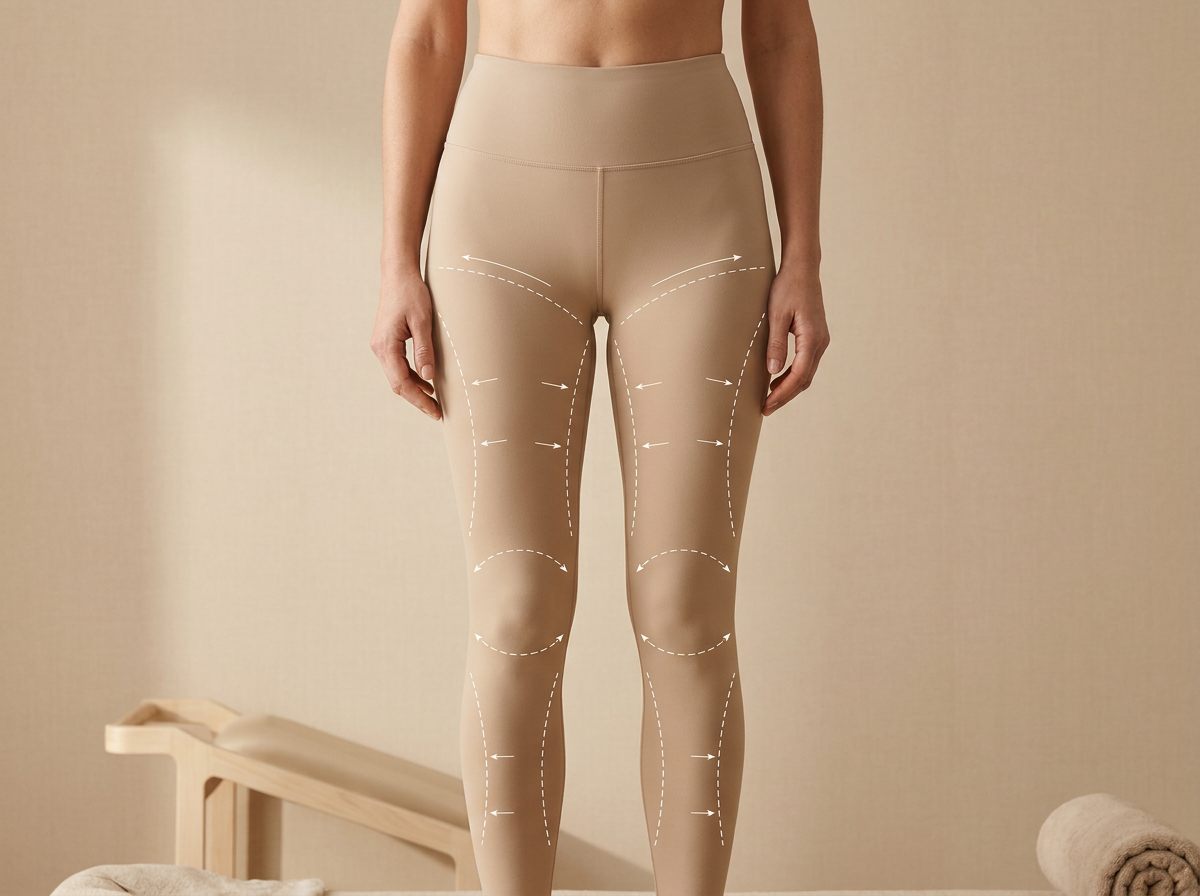
This is a specialised liposuction technique that removes the abnormal fat deposits of lipedema while protecting the lymphatic vessels. It is done for women whose leg, arm or trunk swelling and pain come from this specific fat disorder, not from weight alone.

Lipedema causes a disproportionate, symmetrical build-up of fat in the legs, and sometimes arms, that does not respond to diet or exercise and is often painful to touch. This surgery removes that diseased fat using techniques designed to preserve lymphatic channels, easing pain, heaviness and limb shape, though it is not a cure for the underlying condition.
Dr Cardinali reviews your history, examines limb pattern, and confirms whether lipedema features fit surgical criteria. Imaging or referral for formal diagnosis may be arranged.
Blood tests, compression garment fitting, and staged treatment planning if multiple limbs or large volumes are involved.
Tumescent fluid is infiltrated, then fat is removed with water-assisted or power-assisted liposuction, working carefully around lymphatic vessels.
Regular reviews to check swelling, wound healing, and garment fit, with adjustment of the compression plan as needed.
Every surgical procedure carries potential risks. Risks vary with the procedure and your health, and the surgeon will discuss them with you along with the measures used to reduce them:
No. It reduces diseased fat volume and eases symptoms, but lipedema is a chronic condition that needs ongoing management afterwards.
This depends on how much of the body is affected. Larger or multiple limb involvement is often treated in staged sessions rather than one operation.
Yes. Compression remains part of long-term management, though many patients notice their symptoms are easier to control.
No. The technique specifically protects lymphatic vessels and targets lipedema fat, which behaves differently from ordinary fat.
Light activity usually resumes within a few weeks. More strenuous exercise is introduced gradually, guided by your recovery and swelling.
The only correct answer comes from a clinical examination. Book a consultation — in person, or by video if you are outside the UAE.