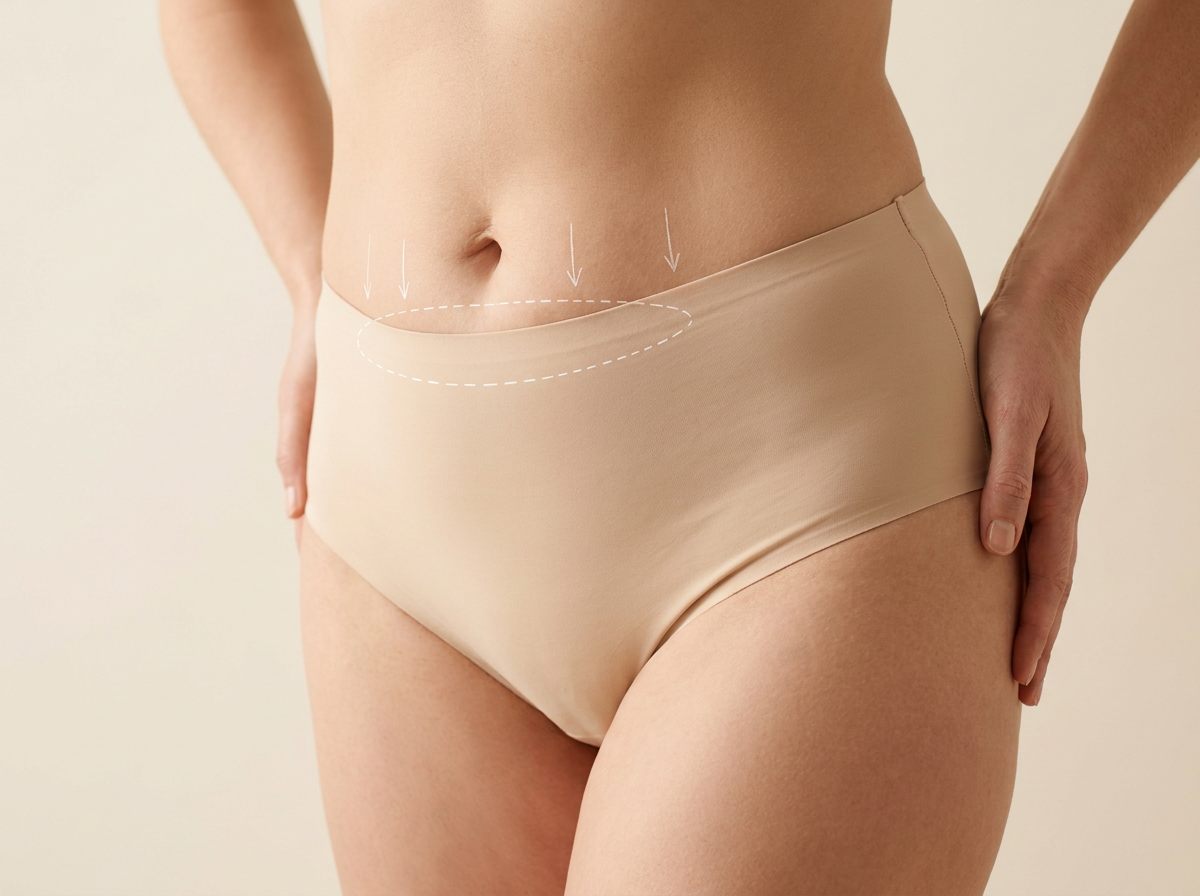
A mini tummy tuck tightens loose skin and muscle in the lower abdomen, below the belly button, through a shorter incision than a full abdominoplasty. It suits women with a localised lower-belly bulge and good skin quality above the navel.

This operation addresses loose skin and a weakened muscle wall confined to the area below the navel, often left after pregnancy or weight loss, when the upper abdomen still has reasonable tone and elasticity.
Dr Cardinali examines your abdominal skin, muscle tone and scar history, discusses your goals, and confirms whether a mini or full tummy tuck is more appropriate.
Blood tests and, if indicated, a medical clearance are arranged. You will be advised on stopping smoking, adjusting certain medications, and fasting before surgery.
Through a shorter, low incision above the pubic area, excess lower-abdominal skin is removed and the lower muscle wall is tightened. The navel is usually left in its original position.
You are reviewed within the first week for a wound check, then at intervals over the following months to monitor healing and settling of the scar.
Every surgical procedure carries potential risks. Risks vary with the procedure and your health, and the surgeon will discuss them with you along with the measures used to reduce them:
A mini tummy tuck treats only the area below the navel through a shorter incision, leaving the belly button in place. A full tummy tuck addresses the whole abdomen, including muscle laxity above the navel.
Stretch marks located on the skin removed during surgery will go with it. Those remaining on skin that stays in place will not be removed, though their appearance may change slightly with tightening.
Yes, liposuction of the flanks or lower abdomen is often combined with a mini tummy tuck to refine contour, depending on your anatomy and Dr Cardinali's assessment.
This depends on the extent of surgery. Some patients go home without a drain; others have one removed within a few days.
It is best to complete childbearing before a tummy tuck, as pregnancy afterwards can affect the abdominal wall repair and the aesthetic result.
The only correct answer comes from a clinical examination. Book a consultation — in person, or by video if you are outside the UAE.