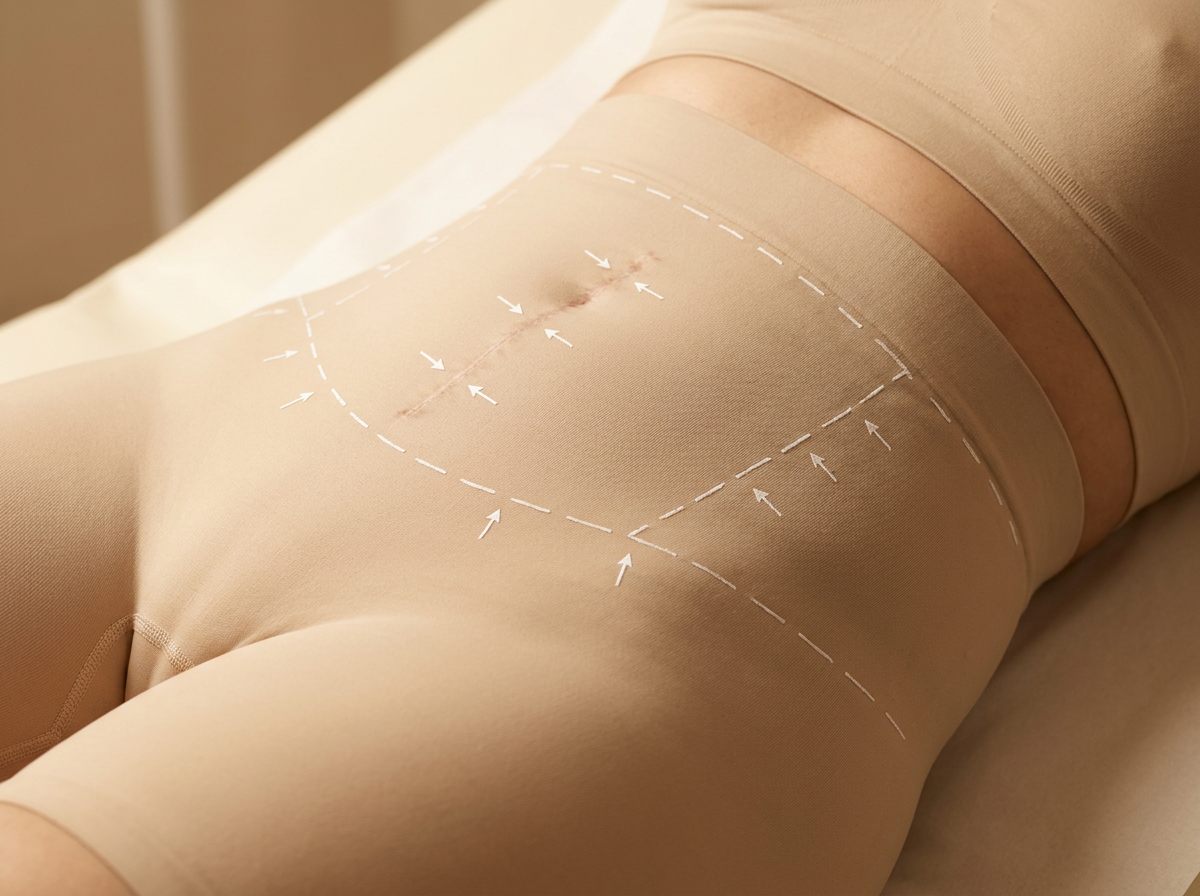
Every surgical procedure carries potential risks. Risks vary with the procedure and your health, and the surgeon will discuss them with you along with the measures used to reduce them:
Recurrence of a visible scarCareful closure technique and tension-reducing methods are used
InfectionSterile technique and wound care instructions reduce this risk
Delayed wound healingSmoking cessation and optimising skin health beforehand help healing
Keloid or hypertrophic scarringScar assessment beforehand and post-op silicone or pressure therapy
Altered skin sensation near the scarUsually temporary and resolves over months
ThromboembolismEarly mobilisation is encouraged for longer procedures under general anaesthesia
Asymmetry or uneven scar linePrecise surgical planning and layered closure aim to minimise this