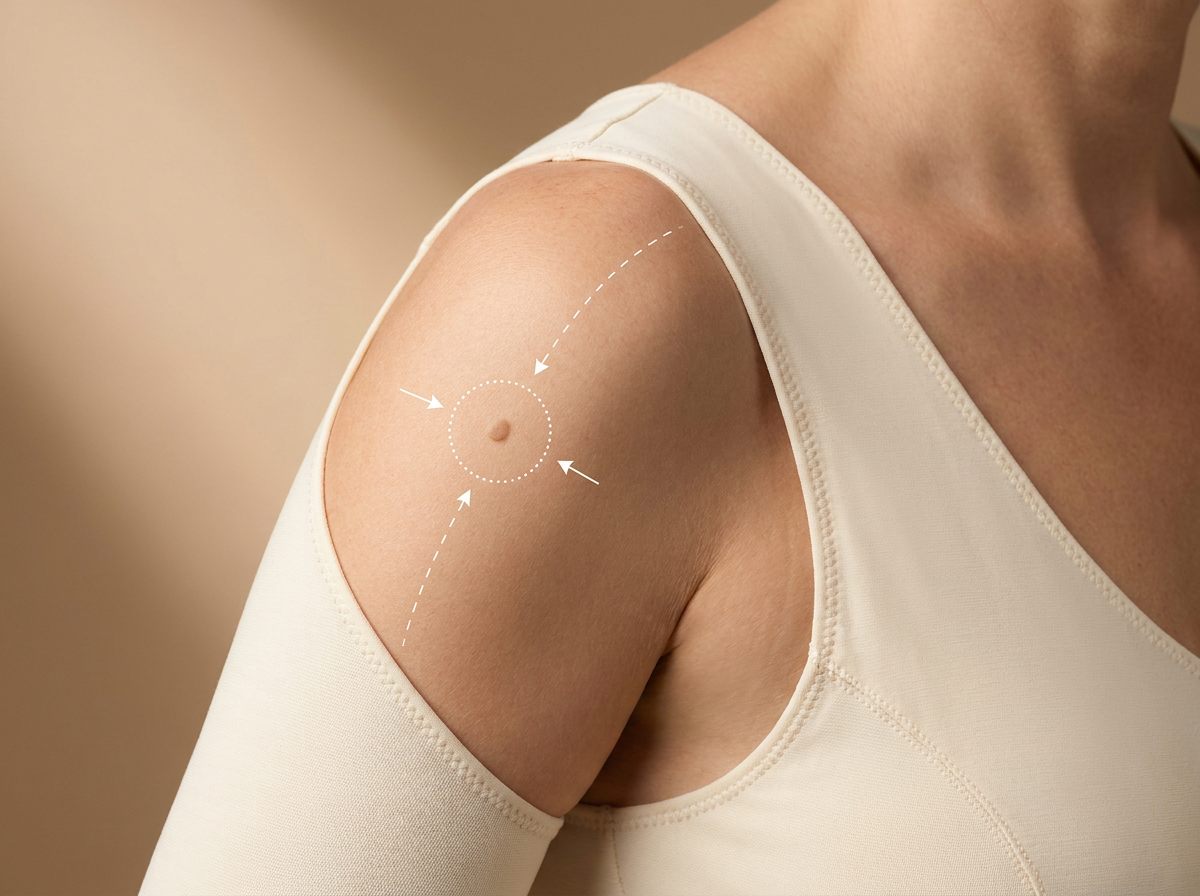
This procedure removes a skin cancer or suspicious lesion with a margin of healthy tissue, and repairs the area to restore skin function and appearance. It is for anyone with a confirmed or suspected skin malignancy such as basal cell carcinoma, squamous cell carcinoma, or melanoma.

This surgery solves a specific problem: a skin lesion that biopsy or clinical examination suggests is cancerous. The goal is complete removal with clear margins, confirmed by pathology, while keeping the repair as discreet as possible.
We review your biopsy or lesion, examine the area, and discuss margin size, closure options, and expected scarring.
You may need blood-thinning medication adjusted. We mark the excision margin before surgery.
The lesion is removed with a margin of healthy tissue. Closure may be a direct suture, local flap, or skin graft, depending on size and location.
The tissue is sent for pathology. We review results, confirm margins are clear, and plan any further treatment if needed.
Every surgical procedure carries potential risks. Risks vary with the procedure and your health, and the surgeon will discuss them with you along with the measures used to reduce them:
Yes, this can happen. Pathology results guide whether a second, wider excision is needed.
Most excisions leave a permanent scar. Its size and appearance depend on lesion size, location, and closure method.
Many smaller lesions are removed under local anaesthesia. Larger or complex cases may need general anaesthesia.
Only if the defect is too large to close directly. We discuss this with you before surgery based on lesion size.
Pathology results typically take about one to two weeks, and we discuss them at your follow-up visit.
The plan depends on histological diagnosis, lesion depth and location. Where needed, care is coordinated with dermatology or oncology for appropriate treatment and follow-up.
The only correct answer comes from a clinical examination. Book a consultation — in person, or by video if you are outside the UAE.